Why content today needs to be activated rather than managed
By Robin Fillinger
About 69 percent of all advertising spending in Germany now goes toward digital channels. At the same time, companies in Germany invest over 30 billion euros annually in digital marketing.
Nevertheless, in many organizations, digital content is still organized using traditional folder structures, cloud storage, or isolated systems.
The problem: Companies invest heavily in content production, but often not enough in its intelligent activation and distribution.
The Real Challenge of Modern Communication
In recent years, many organizations have significantly professionalized their content production. And for good reason: Anyone who wants to reach relevant target audiences today must be present where attention is focused: in the digital realm.
Generation Z, in particular, is fundamentally changing the rules of communication. They spend about half of their waking hours in front of screens. Anyone who wants to reach this target audience in the future needs not only digital content, but above all the ability to deliver content quickly, flexibly, and across multiple channels. As a result, enormous amounts of assets are being created every day:
- high-quality campaigns
- social media formats
- Sponsored assets
- Video content
- Press images
- Digital branding materials
But as the volume of content grows, the real problem shifts. It is not production that becomes the bottleneck, but distribution.
This is because much of the content disappears into folders after it is created, is produced twice, or is never used again. Studies show that, depending on the industry, between 52 and 70 percent of the content produced remains unused. This represents an enormous waste of resources—both economically and in terms of communication.
Why Traditional Digital Asset Management Systems Have Reached Their Limits
Traditional digital asset management systems were originally developed to centrally store and neatly organize media assets. The focus was primarily on administrative tasks such as:
- Storage
- Versioning
- Metadata management
- Archiving
- Rights management
These functions remain essential. Modern content management simply cannot function without structure, organization, and clear access rights. However, the demands placed on communication have changed fundamentally.
Today, it is no longer enough to simply store content and make it searchable. Organizations face the challenge of making content available quickly, flexibly, and across all channels. The crucial question, therefore, is no longer:
“Where is the file?”
But rather:
“How does the right content reach the right people in real time?”
This is precisely where many traditional DAM systems reach their limits. They manage content, but they don’t activate it.
How AI Is Transforming Modern Content and DAM Workflows
With the ever-growing volume of digital content, artificial intelligence (AI) is increasingly becoming a critical factor in modern content workflows. As media libraries grow larger, it becomes more difficult to organize, retrieve, and efficiently deliver content manually. This is precisely where AI is changing the game.
Modern systems can now automatically analyze, structure, and make content available in context, including through:
- automatic tagging
- face and object recognition
- intelligent search processes
- duplicate detection
- automated content assignment
The key difference: Content is no longer just stored; it is actively made usable. This not only reduces administrative overhead, but also transforms the way entire communications and marketing teams work. While routine processes run automatically in the background, more time is freed up for the actual creative work:
- Storytelling
- campaign development
- creative content formats
- strategic communication
AI does not replace creativity. Rather, it creates the technological foundation for implementing creative processes more quickly, efficiently, and scalably.
In sports, in particular, distribution determines reach
Hardly any other industry produces digital content as quickly and continuously as professional sports. Clubs, associations, and organizations publish enormous amounts of content every day:
- Match day content
- Social media clips
- Sponsor assets
- Press photos
- Highlight videos
- Branding materials
The challenge no longer lies in production. Today, content is created in real time—often simultaneously across multiple platforms and for different target audiences. The real key to success is distribution.
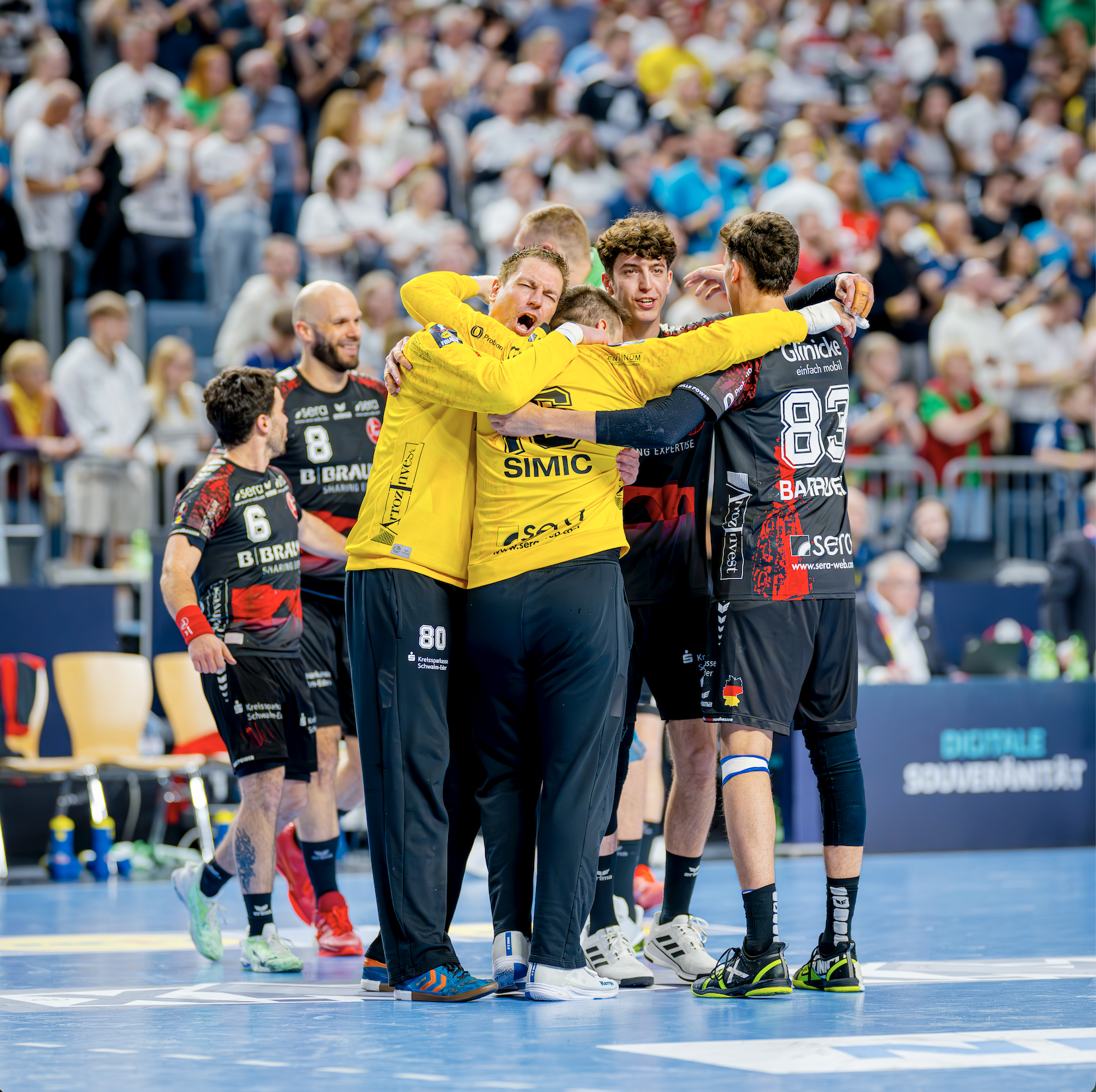
After all, reach isn’t achieved solely through good content, but through the ability to make content immediately available so that sponsors, media outlets, players, or partners can publish and share it on their own. Those who provide assets too late or are unable to scale their processes lose visibility, relevance, and ultimately economic potential.
Just how relevant this factor has become is also demonstrated by the collaboration between teamnext and the German Handball Bundesliga (HBL). There, the Media Hub helps centralize content delivery and make it available in real time to clubs, partners, and media outlets. This is a decisive advantage in a communications landscape defined by speed and reach.
This is precisely why modern DAM platforms are increasingly evolving into central distribution hubs for digital content. With solutions like the teamnext Media Hub, the focus is no longer just on asset management, but above all on the question of how content can be distributed faster, more easily, and in a more targeted manner.